The Tier That Changes Everything
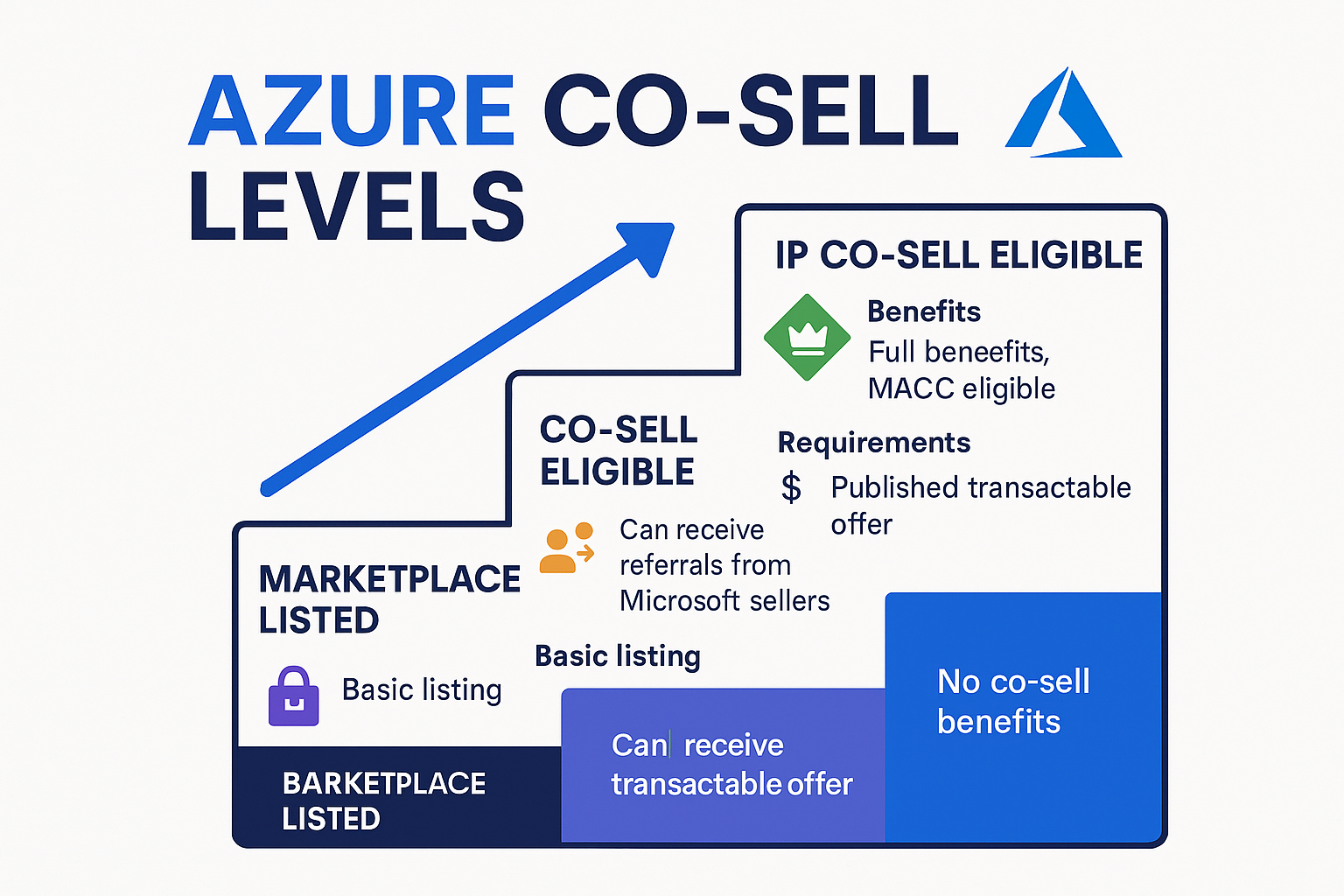
Microsoft's co-sell program has three tiers, and the difference between them is not just a badge — it's the difference between passive marketplace presence and active enterprise pipeline generation.
Tier 1: Marketplace Listed
Your product is on Azure Marketplace. You have a listing. But you have no formal co-sell relationship with Microsoft's field sales. Microsoft sellers cannot easily find or recommend your product in their internal tools.
Tier 2: Co-Sell Eligible
Formal co-sell status. Microsoft sellers can find your listing in their internal tools and submit co-sell referrals. Requirements: a transactable listing and a completed referral agreement. This is a step up, but Microsoft sellers aren't strongly motivated to engage at this tier.
Tier 3: IP Co-Sell Eligible
This is where the real value lives. At IP Co-Sell Eligible:
- Microsoft field sales has direct financial incentive to co-sell your product
- Your product is MACC-eligible — purchases count toward the customer's committed Azure spend
- You gain access to Microsoft's Partner Sales Connect for joint pipeline management
- Revenue sharing on co-sell deals becomes available
- You get priority engagement from Microsoft's enterprise sales organization
How to Qualify for IP Co-Sell
- Transactable listing on Azure Marketplace (SaaS or Azure Application)
- Azure Consumed Revenue (ACR) — your product must drive Azure infrastructure consumption
- Technical validation — demonstrate your product's Azure integration depth
- Commercial validation — show marketplace revenue or strong pipeline
The ACR Requirement Explained
The most misunderstood requirement. Your product needs to drive Azure consumption — meaning it runs on Azure infrastructure, not just integrates with Azure APIs from another cloud. Plan your Azure deployment architecture specifically for this.
MACC Eligibility: Why It Matters So Much
Enterprise buyers with MACC agreements will actively prefer MACC-eligible marketplace purchases. Your product, purchased through marketplace, helps them burn down committed spend they're already obligated to use. This transforms your product from a new budget line item into a strategic deployment of existing budget.
The Progression Timeline
- Marketplace Listed → Co-Sell Eligible: 2–4 weeks (mostly administrative)
- Co-Sell Eligible → IP Co-Sell Eligible: 2–6 months (requires ACR evidence and technical validation)
What Changes at IP Co-Sell
The practical difference: Microsoft's 30,000+ enterprise sellers now have a financial reason to bring your product into their accounts. The volume of inbound co-sell referrals increases significantly. Deal close rates improve because Microsoft's seller involvement adds credibility and procurement navigation.
Automatum helps ISVs navigate the path to IP Co-Sell Eligible — from listing through technical validation. Visit automatum.io to map your Azure co-sell strategy.
No spam. Just the latest releases and tips, interesting articles, and exclusive interviews in your inbox every week.
.svg)