What Is the AWS Enterprise Discount Program?
The AWS Enterprise Discount Program (EDP) is a pricing agreement between AWS and large enterprise customers who commit to spending a minimum amount on AWS services over a defined period, typically one to five years. In exchange for this committed spend, AWS provides the buyer with a percentage discount on their overall AWS bill. EDP agreements are negotiated directly between the enterprise and AWS, and the specific terms, including discount rates and commitment levels, remain confidential between the parties involved.
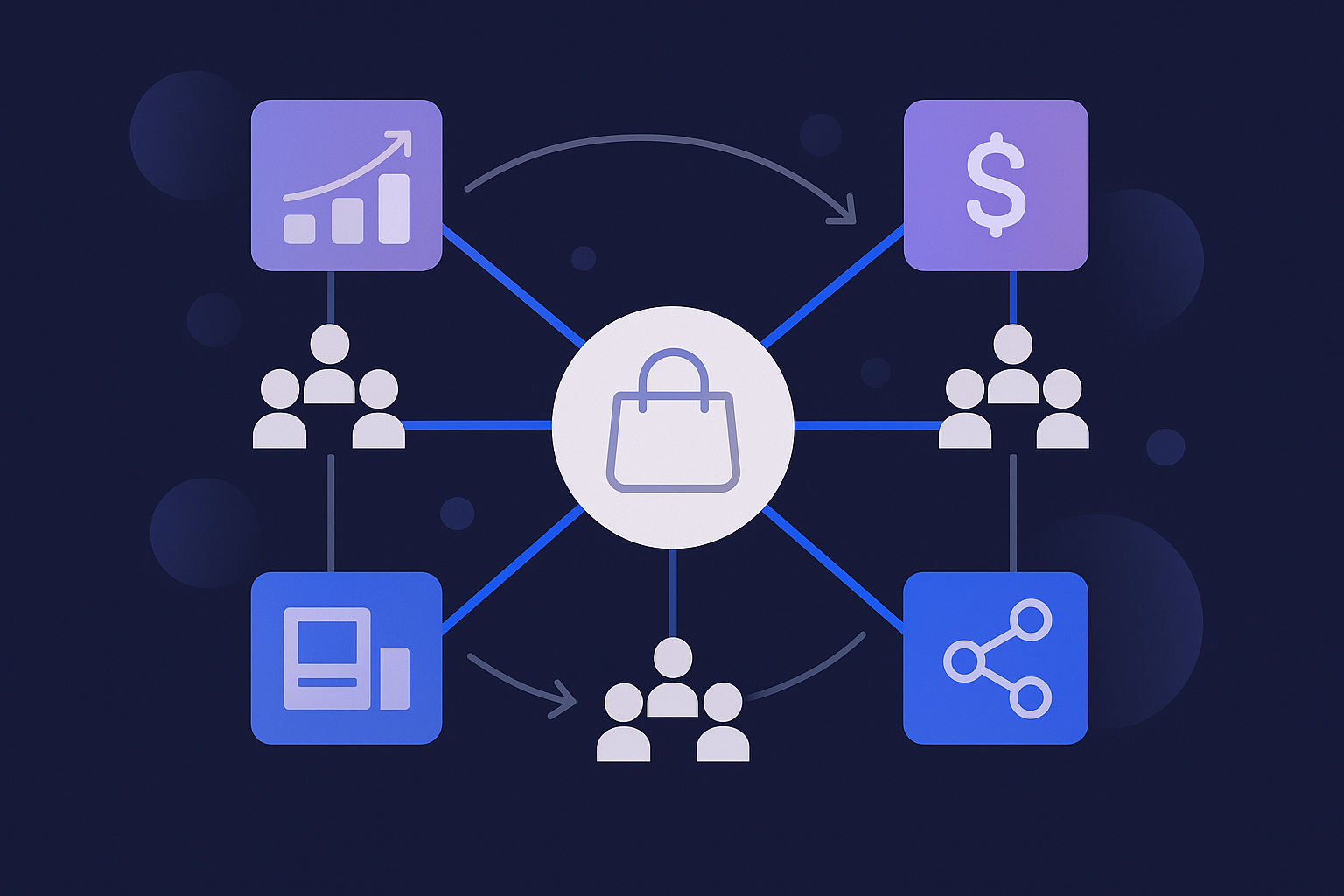
For ISVs selling on AWS Marketplace, EDP is far more than a procurement technicality. When an enterprise buyer purchases your software through AWS Marketplace, that spend counts toward their EDP commitment. This creates a powerful incentive for buyers to consolidate their software procurement through the marketplace rather than purchasing directly from vendors. Understanding this dynamic is essential for any ISV looking to accelerate their AWS Marketplace revenue and shorten deal cycles with enterprise customers.
The EDP mechanism effectively transforms AWS Marketplace from a discovery and distribution channel into a strategic procurement vehicle. Buyers with active EDP agreements are motivated to route as much spending as possible through AWS to meet their commitments and unlock their negotiated discounts. This means ISVs who position themselves correctly can tap into pre-allocated budgets that buyers are actively looking to spend.
How AWS EDP Works: The Mechanics
At its core, EDP operates on a simple principle: commit more, save more. An enterprise negotiates a total spend commitment with AWS, and in return, AWS applies a blanket discount across eligible services. The commitment is measured against the enterprise's total AWS bill, which includes both first-party AWS services like EC2, S3, and Lambda, and third-party marketplace purchases made through AWS Marketplace.
The inclusion of marketplace purchases in EDP commitments was a pivotal change that AWS introduced to accelerate marketplace adoption among enterprise buyers. Previously, enterprises had to treat marketplace software as a separate line item outside their AWS relationship. Now, a $10 million EDP commitment can be drawn down by purchasing infrastructure, managed services, and third-party ISV software all through a single consolidated billing relationship.
EDP agreements typically follow an annual cadence with a ramp structure. For example, an enterprise might commit to $5 million in year one, $7 million in year two, and $10 million in year three. If the enterprise falls short of their annual commitment, they still owe the committed amount, creating a strong incentive to find additional AWS and marketplace spending to avoid wasting their commitment. This "use it or lose it" dynamic is what makes EDP buyers some of the most motivated purchasers on AWS Marketplace.
EDP vs. Standard AWS Pricing
Without an EDP agreement, enterprises pay standard on-demand pricing for AWS services, with the option to purchase Reserved Instances or Savings Plans for specific compute workloads. EDP provides an additional layer of discounting on top of these existing mechanisms. The key distinction for ISVs is that EDP buyers are not looking for discounts on your software specifically. Your software purchase does not need to be discounted for the buyer to benefit; the buyer benefits because the marketplace purchase counts toward their EDP drawdown, which earns them their negotiated discount on their entire AWS bill.
EDP Commitment Tiers and Discount Structures
While exact EDP terms are confidential and vary by customer, the industry has established general benchmarks for commitment levels and corresponding discount ranges. The following table provides approximate ranges that ISVs can use to understand the landscape and tailor their sales conversations accordingly.

| Commitment Tier | Annual Spend Range | Typical Discount Range | Common Contract Duration | Buyer Profile |
|---|---|---|---|---|
| Entry Level | $1M - $5M | 3% - 7% | 1 - 2 years | Mid-market companies beginning cloud adoption |
| Growth | $5M - $20M | 7% - 12% | 2 - 3 years | Scaling enterprises with significant cloud workloads |
| Enterprise | $20M - $50M | 10% - 15% | 3 - 5 years | Large enterprises with mature cloud strategies |
| Strategic | $50M - $200M | 12% - 18% | 3 - 5 years | Major enterprises and digital-native companies |
| Flagship | $200M+ | 15% - 22% | 3 - 5 years | Fortune 500 and hyperscale cloud consumers |
These figures are illustrative and based on publicly available industry reports and analyst estimates. Actual discounts depend on numerous factors including the customer's negotiating leverage, their relationship with AWS, the specific services they consume, and the competitive dynamics in their account. ISVs should use these ranges as directional guidance rather than precise benchmarks.
Why EDP Matters for ISVs on AWS Marketplace
The EDP program creates a flywheel effect that directly benefits ISVs selling through AWS Marketplace. When buyers have committed spend they need to draw down, they actively seek marketplace purchases that count toward their commitment. This transforms the typical enterprise sales dynamic from "convince the buyer to spend money" to "help the buyer allocate money they have already committed to spend." The psychological and procedural difference is enormous.
Accelerated Deal Cycles
Enterprise software deals typically involve lengthy procurement cycles with multiple approval layers, budget negotiations, and vendor assessments. When a buyer has an active EDP agreement with unallocated committed spend, the procurement conversation shifts dramatically. The budget already exists within the AWS billing relationship. The procurement vehicle, AWS Marketplace, is already approved. The buyer simply needs to validate the technical fit and route the purchase through marketplace channels. ISVs who understand this dynamic report deal cycle reductions of 30% to 60% compared to traditional direct sales.
Simplified Procurement
EDP buyers have already established their contractual relationship with AWS, including payment terms, invoicing procedures, and compliance reviews. When they purchase through AWS Marketplace, they inherit these existing terms. This eliminates the need for separate vendor onboarding, new purchase orders, additional payment processing, and redundant security reviews. For the buyer's procurement team, a marketplace purchase against their EDP commitment is operationally identical to increasing their AWS infrastructure consumption.
Budget Accessibility
One of the most significant advantages for ISVs is that EDP spend often comes from centralized cloud budgets rather than departmental software budgets. A line-of-business leader who has exhausted their software budget for the quarter may still have access to unused EDP commitment through their organization's cloud team. This opens up entirely new budget pools that would be inaccessible through traditional procurement channels. ISVs who coach their champions on how to access EDP budgets consistently unlock deals that would otherwise stall on budget availability.
How to Identify EDP Buyers
Identifying which prospects and customers have active EDP agreements is critical for prioritizing your sales efforts and tailoring your marketplace strategy. While AWS does not publish a directory of EDP customers, several signals can help ISVs identify likely EDP buyers and adjust their approach accordingly.
- AWS Partner Network intelligence: If you are enrolled in the AWS ISV Accelerate program, your AWS Partner Development Manager (PDM) can often confirm whether a target account has an EDP agreement. Building a strong relationship with your PDM and regularly sharing your pipeline is one of the most reliable ways to get EDP intelligence on specific accounts.
- Enterprise Agreement language: During sales conversations, listen for mentions of "committed spend," "AWS commitment," "drawdown," or "EDP" from the buyer's procurement or cloud operations teams. These terms signal an active EDP relationship.
- Marketplace procurement preference: If a prospect proactively asks whether your product is available on AWS Marketplace or specifically requests a marketplace private offer rather than a direct contract, this is a strong indicator of an EDP agreement driving their procurement preference.
- Company size and cloud maturity: Organizations spending more than $1 million annually on AWS are prime EDP candidates. Fortune 1000 companies, digital-native businesses, and organizations with significant cloud migration programs are disproportionately likely to have EDP agreements in place.
- Public cloud commitments: Some enterprises announce multi-year cloud commitments in press releases, earnings calls, or investor presentations. These public statements often correspond to EDP or similar contractual arrangements.
Positioning Your Product for EDP Consumption
Simply listing your product on AWS Marketplace does not automatically capture EDP-driven demand. ISVs need to deliberately position their offerings to maximize appeal for EDP buyers. This involves strategic decisions about listing type, pricing structure, and go-to-market messaging that align with how EDP buyers evaluate and procure software.
Listing Strategy
Ensure your product is listed as a SaaS or AMI product on AWS Marketplace with clear, transparent pricing. EDP buyers prefer marketplace-native purchasing experiences that flow cleanly through their existing AWS billing. If your listing requires the buyer to negotiate a separate contract outside of the marketplace transaction, you lose much of the procurement advantage that makes EDP-driven deals attractive. Your listing should support both public pricing for self-service purchases and private offers for negotiated enterprise deals.
Pricing Alignment
Structure your pricing to align with how enterprises consume cloud services. Annual subscription pricing maps naturally to EDP annual commitment periods. Usage-based pricing that scales with the buyer's cloud footprint creates a natural correlation between their growing AWS investment and your software consumption. Avoid pricing structures that create friction in the marketplace transaction, such as requiring large upfront payments that might exceed the buyer's remaining quarterly EDP allocation.
Sales Enablement
Train your sales team to lead with EDP value messaging when engaging enterprise prospects. Your sellers should be able to explain how a marketplace purchase counts toward the buyer's EDP commitment, articulate the procurement advantages of buying through marketplace, and help the buyer's champion make the internal case for routing the purchase through their AWS relationship. Create one-pagers, ROI calculators, and internal champion decks that specifically address the EDP angle.
Private Offers and EDP Integration
AWS Marketplace private offers are the primary mechanism through which ISVs close negotiated enterprise deals on the marketplace, and they integrate seamlessly with EDP commitments. A private offer allows you to create a custom pricing proposal for a specific buyer, with negotiated terms, custom payment schedules, and enterprise-specific configurations that would not be possible through public marketplace listings.
When a buyer accepts a private offer on AWS Marketplace, the entire transaction amount counts toward their EDP drawdown. This is true regardless of whether the private offer uses upfront payment, annual payments, or usage-based pricing. The buyer sees the charge on their consolidated AWS bill, and it reduces their remaining EDP commitment just like any other AWS service consumption.
Structuring Private Offers for EDP Buyers
When creating private offers for EDP buyers, consider the timing and structure of payments in relation to their EDP commitment periods. A buyer who needs to draw down $2 million in remaining commitment before their annual renewal may prefer upfront payment, while a buyer who has already met their current-year commitment might prefer a multi-year offer that spreads spend across future periods. Work with your buyer's procurement team to understand their EDP timeline and structure the payment schedule to maximize the EDP benefit. This consultative approach builds trust and positions you as a strategic partner.
How EDP Impacts Deal Cycles
The presence of an EDP agreement fundamentally changes enterprise deal dynamics. Understanding these impacts helps ISVs forecast more accurately and design their go-to-market motions to capitalize on EDP-driven buying behavior.
End-of-Period Urgency
EDP commitments operate on annual or multi-year periods, creating natural urgency as each period end approaches. Buyers who have not met their annual commitment face paying for unused capacity, creating a predictable surge in marketplace purchasing in the final quarter. ISVs who track their pipeline by EDP renewal dates can time outreach to coincide with these windows of heightened buying urgency.
Reduced Negotiation Friction
Because the buyer is motivated to spend their committed budget rather than minimize expenditure, price negotiations in EDP-driven deals tend to be less adversarial than traditional procurement. The buyer's primary concern shifts from "how do I get the lowest price" to "how do I maximize value from spend I have already committed." This does not mean ISVs should not offer competitive pricing, but it does mean the negotiation dynamic favors value-based conversations over pure cost minimization.
Multi-Stakeholder Alignment
EDP agreements are typically managed by a central cloud or platform team within the enterprise. When a line-of-business buyer wants to purchase software through the marketplace, the cloud team becomes an ally rather than a gatekeeper, because the purchase helps the organization draw down its commitment. This multi-stakeholder alignment reduces internal friction and accelerates approvals that might otherwise take weeks or months in a traditional procurement process.
Common EDP Misconceptions
Several misconceptions about EDP persist among ISVs and can lead to missed opportunities or misaligned strategies. Addressing these misconceptions directly ensures your team approaches EDP-driven deals with accurate expectations.
- "EDP buyers want discounted software." EDP discounts apply to the buyer's overall AWS bill, not to individual marketplace purchases. Buyers benefit from routing purchases through marketplace regardless of whether the ISV offers a discount. Your product does not need to be cheaper on marketplace for the buyer to realize EDP value.
- "Only very large enterprises have EDP agreements." While the largest EDP commitments make headlines, AWS offers EDP agreements to companies spending as little as $1 million annually. Mid-market companies and fast-growing startups increasingly use EDP to manage their cloud costs, expanding the addressable market for ISVs.
- "EDP only applies to AWS infrastructure spending." Third-party marketplace purchases have counted toward EDP commitments for several years now. This is a deliberate strategy by AWS to drive marketplace adoption, and it applies to SaaS subscriptions, AMI-based products, and professional services purchased through the marketplace.
- "Private offers are not necessary for EDP deals." While public listings do count toward EDP, enterprise buyers almost always prefer private offers for significant purchases. Private offers provide the customized terms, negotiated pricing, and payment flexibility that enterprise procurement processes require, regardless of the EDP dynamic.
- "You need AWS approval to sell to EDP customers." Any ISV with a marketplace listing can sell to EDP buyers. There is no special certification or approval required. However, ISVs enrolled in ISV Accelerate benefit from co-sell support and account intelligence that makes it easier to identify and engage EDP buyers.
Strategies to Maximize EDP-Driven Revenue
With a clear understanding of how EDP works and why it matters, ISVs can implement targeted strategies to capture a larger share of EDP-driven marketplace spending. The following approaches have proven effective for ISVs across various product categories and deal sizes.
1. Build an EDP Calendar
Work with your AWS PDM and your sales team to map out the EDP renewal dates for your key accounts and target prospects. EDP commitments renew on specific dates, and the weeks leading up to renewal are when buyers are most motivated to close marketplace deals. Create a pipeline view organized by EDP period end dates and prioritize outreach to accounts approaching their commitment deadlines. This simple organizational step can dramatically improve your deal timing and close rates.
2. Enable Your Champions
Your internal champion at the buyer organization needs ammunition to make the case for a marketplace purchase. Create materials that specifically address the EDP angle: how the purchase counts toward committed spend, how marketplace procurement is faster and simpler than traditional channels, and how the organization benefits from consolidating software purchasing through their existing AWS relationship. The more effectively you arm your champion, the faster they can navigate internal approvals.
3. Align with AWS Co-Sell Motions
AWS account teams are measured on their customers' marketplace adoption and EDP utilization. When you register a co-sell opportunity through AWS Partner Central, the AWS account team has a direct incentive to support your deal because it drives marketplace consumption against their customer's EDP commitment. Actively engaging the AWS co-sell motion for your enterprise deals ensures you have AWS advocacy in accounts where EDP is a factor.
4. Offer Flexible Deal Structures
EDP buyers have diverse needs depending on where they are in their commitment cycle. Some need to accelerate spending to meet near-term commitments. Others want to spread spend across multiple years for budget predictability. Design your private offer strategy to accommodate both scenarios. Multi-year deals, annual prepayments, quarterly billing, and usage-based pricing can all be structured to align with the buyer's EDP timeline and maximize the mutual benefit of the transaction.
5. Track and Report EDP Metrics
Measure the impact of EDP on your marketplace business by tracking metrics specific to EDP-driven deals. Monitor the percentage of your marketplace revenue coming from known EDP accounts, the average deal cycle for EDP versus non-EDP deals, the average deal size for EDP-driven transactions, and the win rate difference between EDP and non-EDP opportunities. These metrics help you quantify the EDP opportunity, justify continued investment in marketplace go-to-market, and refine your strategy over time.
Getting Started with EDP-Driven Marketplace Sales
For ISVs early in their AWS Marketplace journey, capitalizing on EDP does not require a massive investment. Start by ensuring your marketplace listing supports private offers with flexible payment terms, join the AWS ISV Accelerate program for co-sell support, and train your enterprise sales team to ask about AWS relationships and committed spend during discovery calls. The ISVs who treat EDP as a core element of their marketplace strategy, rather than an incidental benefit, consistently outperform their peers in enterprise marketplace revenue.
How Automatum Helps ISVs Capture EDP Revenue
Managing private offers, tracking deal timing, and coordinating with AWS co-sell programs across multiple enterprise accounts requires operational discipline and the right tooling. Automatum is purpose-built to help ISVs streamline their AWS Marketplace operations, including the workflows that are critical for EDP-driven sales.
With Automatum, you can create and manage private offers in minutes rather than hours, track your pipeline by EDP-relevant timelines, automate metering and billing for usage-based pricing models, and consolidate your marketplace analytics across all your enterprise accounts. Our platform handles the operational complexity of marketplace selling so your team can focus on building relationships with EDP buyers and closing deals.
If you are an ISV looking to accelerate your AWS Marketplace revenue by capitalizing on EDP-driven enterprise demand, visit automatum.io to learn how our platform can help you scale your marketplace operations and capture more of the committed spend your buyers are actively looking to deploy.
No spam. Just the latest releases and tips, interesting articles, and exclusive interviews in your inbox every week.
.svg)