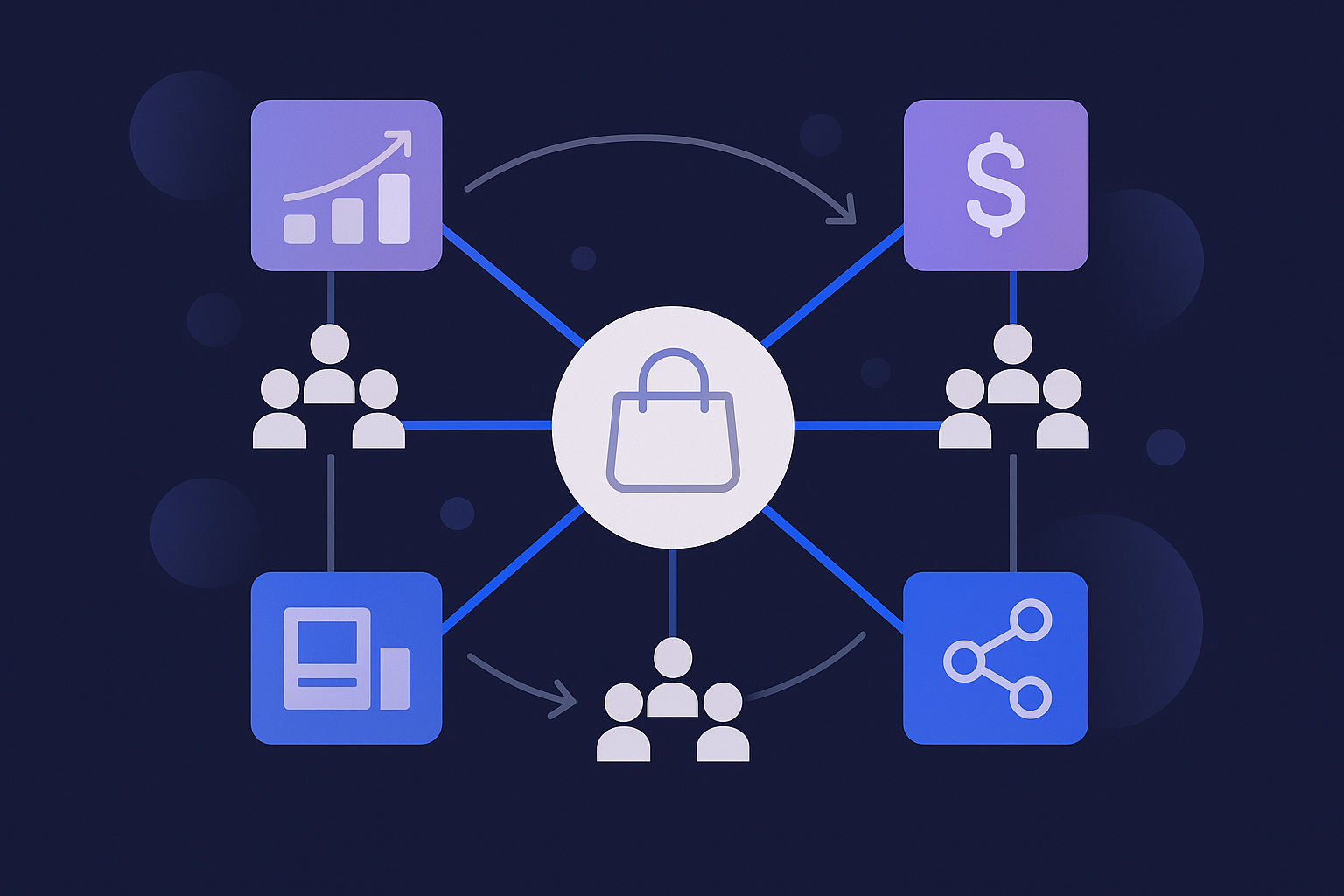
The Evolution of Channel Partnerships on Cloud Marketplaces
Channel partnerships have been a cornerstone of enterprise software distribution for decades, but cloud marketplaces have fundamentally transformed how these partnerships operate. The traditional channel model, where partners resold software through their own procurement and billing infrastructure, is being replaced by a marketplace-native model where partners transact through AWS, Azure, and GCP's built-in commercial platforms. This shift has created enormous opportunities for ISVs and their partners, but it also demands a new playbook for structuring, enabling, and managing channel relationships.
The numbers underscore the urgency. Cloud marketplace transactions exceeded $15 billion in 2025, and channel-driven deals accounted for an estimated 25% to 35% of that volume, depending on the marketplace. AWS reports that Channel Partner Private Offers (CPPO) grew over 100% year-over-year in recent periods, and Azure's channel programs have expanded to support multi-party deals involving ISVs, partners, and Microsoft's own sales teams. For ISVs that are not actively building a channel-first marketplace strategy, the cost of inaction is growing every quarter.
The evolution is not simply about moving existing partner transactions onto a new platform. Marketplace-native channel programs introduce new capabilities that were impossible in the traditional model: centralized billing through the buyer's cloud commitment, automated revenue sharing, co-sell attribution with cloud provider sales teams, and real-time deal tracking. These capabilities reduce friction for buyers and partners alike, making marketplace-based channel transactions faster, more transparent, and easier to scale than their traditional counterparts.
AWS Channel Partner Private Offers (CPPO)
AWS Marketplace's CPPO program is the most mature and widely adopted channel mechanism on any cloud marketplace. CPPO allows authorized channel partners to create private offers on behalf of ISVs, enabling the partner to sell the ISV's product to end customers through the AWS Marketplace with an agreed-upon discount or markup structure.

How CPPO Works
The CPPO workflow involves three parties: the ISV (who lists the product), the channel partner (who creates the private offer), and the end customer (who accepts and pays through AWS). The ISV first authorizes a specific partner to resell their product by creating a partner opportunity in the AWS Marketplace Management Portal. The ISV sets the wholesale price that the partner pays. The partner then creates a private offer to the end customer at a retail price that includes their margin. When the customer accepts the offer, AWS handles all billing, collecting from the customer and distributing revenue to both the ISV and the partner according to the agreed split.
CPPO Authorization and Controls
ISVs maintain granular control over their CPPO program. You can authorize partners on a per-product basis, set maximum discount thresholds, define allowed contract durations, and specify whether the partner can modify pricing dimensions. This level of control prevents channel conflict and ensures pricing consistency across your partner ecosystem. AWS also provides visibility into all CPPO transactions, so the ISV always knows what prices partners are offering and to whom.
Revenue Distribution
AWS collects payment from the end customer and distributes revenue according to the CPPO agreement. The ISV receives their wholesale price minus AWS's marketplace fee, and the partner receives the spread between wholesale and retail. This automated revenue distribution eliminates the manual invoicing, reconciliation, and payment tracking that plague traditional channel models. Disbursements follow AWS's standard marketplace payout schedule, typically monthly with a 30 to 60-day delay from the transaction date.
Azure CSP and Marketplace Channel Programs
Microsoft's channel programs for Azure Marketplace are built around the Cloud Solution Provider (CSP) model and, more recently, Multiparty Private Offers (MPO). These programs leverage Microsoft's extensive partner ecosystem, which includes tens of thousands of CSP partners worldwide, to create a distribution network that is deeply integrated with Azure's commercial platform.
Azure Multiparty Private Offers (MPO)
Azure MPO is Microsoft's answer to AWS CPPO and represents a significant advancement in marketplace channel capabilities. MPO enables three-party transactions where the ISV, channel partner, and Microsoft all participate in a single deal. The ISV sets their price, the partner adds their margin or services, and the end customer transacts through the Azure Marketplace using their Microsoft Customer Agreement (MCA). Revenue is automatically distributed to all parties, and the transaction counts against the customer's Microsoft Azure Consumption Commitment (MACC).
CSP Integration
The CSP program allows Microsoft's network of managed service providers and resellers to sell Azure Marketplace offerings to their customers. ISVs can opt into CSP distribution when creating their marketplace offer, enabling CSP partners to discover and resell their products through the Partner Center. The CSP model is particularly powerful for ISVs targeting small and mid-market buyers who purchase their cloud services through a managed partner rather than directly from Microsoft.
Co-Sell Integration
Azure's channel programs are tightly integrated with Microsoft's co-sell engine. When a channel partner creates a deal involving an ISV's marketplace product, the transaction can be tagged as co-sell eligible, which means Microsoft's own sellers may actively support the deal. This integration creates a multiplier effect: the ISV's product is promoted not only by the channel partner but also by Microsoft's field sales team, significantly expanding reach and deal velocity.
GCP Partner Programs and Marketplace
Google Cloud's marketplace channel capabilities are evolving rapidly, though they remain less mature than AWS and Azure's offerings. GCP's approach centers around the Google Cloud Partner Advantage program and its marketplace reseller capabilities.
Current State of GCP Channel on Marketplace
GCP Marketplace supports partner-led transactions through its reseller program, where authorized partners can resell ISV products to end customers. The buyer transacts through the GCP Marketplace, and the purchase counts against their Google Cloud committed use discounts (CUDs). Revenue sharing between the ISV and partner is managed through separate agreements, with Google distributing the ISV's portion after deducting the marketplace fee.
Google Cloud Partner Advantage
The Partner Advantage program provides a framework for partner tiers (Member, Partner, Premier) with increasing benefits at each level, including access to co-sell support, marketing development funds, and technical enablement resources. For ISVs building a channel strategy on GCP, aligning with Premier-tier partners provides the strongest go-to-market leverage, as these partners have established relationships with Google's field sales teams and access to joint selling programs.
Comparison of Channel Partner Programs Across Marketplaces
| Capability | AWS (CPPO) | Azure (MPO / CSP) | GCP (Partner Reseller) |
|---|---|---|---|
| Partner Offer Creation | Partner creates private offer directly | ISV and partner co-create multiparty offer | Partner resells through marketplace |
| Revenue Distribution | Automated by AWS based on wholesale/retail split | Automated by Microsoft to all parties | ISV portion automated; partner margin via separate agreement |
| Commitment Drawdown | Yes (EDP/commit) | Yes (MACC) | Yes (CUD) |
| Co-Sell Attribution | ACE Pipeline Manager integration | Native Partner Center co-sell tracking | Partner Advantage co-sell support |
| Partner Authorization | Per-product, per-partner with pricing controls | Per-offer with margin configuration | Partner Advantage tier requirements |
| Deal Registration | Via ACE or ISV's own system | Via Partner Center referral system | Via Partner Advantage portal |
| Multi-Year Support | Up to 5-year contracts | Up to 3-year terms standard | Up to 3-year terms |
| Custom Pricing | Full flexibility on dimensions and rates | Full flexibility with private plans | Custom pricing through private offers |
| Program Maturity | Most mature, largest adoption | Rapidly growing, strong enterprise traction | Emerging, fastest-growing |
Building a Channel-First Marketplace Strategy
A channel-first marketplace strategy means designing your go-to-market motion around partner-led distribution from the outset, rather than treating channel as an afterthought bolted onto a direct sales model. This approach requires deliberate decisions about pricing architecture, partner enablement, and operational infrastructure.
Design Your Pricing for Channel
Your marketplace pricing must accommodate partner margins without creating conflict with your direct sales motion. The most effective approach is to establish a clear wholesale/retail pricing framework where your direct price and your partner-facilitated price are consistent from the buyer's perspective. Avoid situations where a buyer can get a lower price by going direct, as this undermines partner motivation. A common structure is to set the marketplace list price at retail, offer a standard direct discount for qualified buyers, and provide partners with wholesale pricing that allows them to match or slightly improve upon the direct discount while preserving their margin.
Select Partners Strategically
Not every partner in your ecosystem is suited for marketplace-based channel sales. The ideal marketplace channel partner has three characteristics: an existing relationship with the target buyer segment, familiarity with the cloud provider's commercial platform and programs, and the operational capability to manage marketplace transactions. Prioritize partners who are already active on the relevant marketplace and have a track record of closing deals through CPPO, MPO, or equivalent programs. Starting with 5 to 10 well-enabled partners will generate more revenue than onboarding 100 partners who lack marketplace expertise.
Align with Cloud Provider Co-Sell Programs
The most powerful aspect of marketplace channel partnerships is their potential to activate cloud provider sales teams. When a channel partner creates a deal that is co-sell eligible, the cloud provider's field sellers have a financial incentive to support the opportunity. To maximize this benefit, ensure that your product is registered in the relevant co-sell programs (AWS ISV Accelerate, Azure IP Co-Sell, Google Cloud Partner Advantage) and that your partners understand how to tag deals for co-sell attribution. The combination of a motivated channel partner plus a co-sell-engaged cloud seller creates a dual sales force that dramatically accelerates deal velocity.
Partner Onboarding and Enablement
Onboarding a channel partner for marketplace sales is fundamentally different from traditional channel onboarding. Partners need training on marketplace-specific workflows, pricing configuration, and deal mechanics in addition to the standard product and sales training.
Technical Enablement
Partners must understand how your product is listed on each marketplace, what pricing dimensions are available, and how the buyer's purchasing experience works. Create a partner enablement kit that includes step-by-step guides for creating CPPO or MPO offers, FAQs about billing and revenue distribution, and troubleshooting resources for common transaction issues. Supplement written materials with live training sessions where partners can walk through the offer creation process with your team's support.
Sales Enablement
Marketplace-aware sales enablement goes beyond product pitch decks. Partners need to understand how to position marketplace procurement benefits to buyers, such as committed spend drawdown, consolidated billing, and streamlined procurement. Provide partners with buyer-facing materials that explain the marketplace purchasing process, highlight the financial advantages of marketplace transactions, and address common procurement objections. The most successful ISV channel programs also provide partners with ROI calculators, competitive battle cards, and customer case studies specifically tailored for marketplace conversations.
Ongoing Support and Communication
Channel enablement is not a one-time event. Establish a regular cadence of partner communication that includes product updates, pricing changes, new marketplace features, and deal best practices. Create a partner portal or shared workspace where partners can access current materials, submit deal registration, and request support. Assign dedicated channel managers to your top-performing partners to provide personalized guidance and accelerate deal progression.
Deal Registration and Attribution
Clear deal registration processes prevent channel conflict and ensure that partners receive credit and compensation for the opportunities they bring. Without a rigorous deal registration system, you risk having multiple partners (or your direct sales team) competing for the same buyer, which damages relationships and erodes partner trust.
Implement a deal registration system that requires partners to register opportunities before creating marketplace offers. The registration should capture the buyer's identity, the estimated deal value, the expected close date, and any relevant context about the buyer's requirements. Your channel team reviews registrations within 24 to 48 hours and either approves the registration (granting the partner exclusive rights to the opportunity for a defined period) or flags potential conflicts.
On AWS, deal registration can be managed through the ACE (APN Customer Engagements) Pipeline Manager, which integrates with CPPO to provide end-to-end visibility from opportunity creation through transaction completion. On Azure, the Partner Center referral system serves a similar function, allowing partners to register opportunities and track co-sell status. For GCP, deal registration typically requires an ISV-managed system supplemented by the Partner Advantage portal.
Revenue Sharing Models
The revenue sharing structure you offer partners directly impacts their motivation to sell your product and the caliber of partners you attract. Cloud marketplace channel programs support several revenue sharing models, each with distinct trade-offs.
Fixed Margin Model
The ISV sets a fixed wholesale price, and the partner adds their margin on top. This model is simple, predictable, and gives partners full control over their margin. It works well when partners are adding significant value through services, customization, or ongoing managed support. The risk is that aggressive partners may set very high retail prices that make your product uncompetitive, so ISVs often set maximum retail price guidelines alongside the wholesale pricing.
Percentage-Based Model
The partner receives a fixed percentage of the deal value, regardless of the retail price. This model is common for referral-style partnerships where the partner's primary contribution is the customer relationship rather than value-added services. Typical percentages range from 10% to 25% depending on the partner's level of involvement. This model is administratively simpler but provides less flexibility for partners to differentiate on services.
Tiered Model
The partner's margin or percentage increases based on volume thresholds, certification levels, or program tier status. This model incentivizes partners to invest in your product and rewards top performers with better economics. For example, a base-tier partner might earn 15% while a premier-tier partner earns 25%, with the tier determined by annual revenue contribution, number of certified sellers, or joint marketing investment.
Managing Partner Conflicts
Channel conflict is inevitable in any multi-partner program, and marketplace-based channels are no exception. The most common conflicts arise when multiple partners target the same buyer, when a partner competes with the ISV's direct sales team, or when partners undercut each other's pricing to win deals.
Preventing and resolving these conflicts requires a combination of clear policies, transparent communication, and consistent enforcement. Establish written channel conflict resolution policies that define how overlapping opportunities are adjudicated, how direct versus partner leads are classified, and what consequences exist for policy violations. Communicate these policies during partner onboarding and reinforce them regularly.
Technology also plays a role in conflict prevention. Use your CRM and deal registration system to flag potential overlaps early, before they escalate into disputes. When a new deal registration matches an existing opportunity in your pipeline, route it to your channel manager for review rather than allowing it to proceed unchecked. Proactive conflict identification is far less damaging to partner relationships than reactive conflict resolution.
Scaling Your Partner Program
Scaling a marketplace channel program beyond the initial 5 to 10 partners requires systematization of every aspect of the partner lifecycle: recruitment, onboarding, enablement, performance tracking, and program management.
Automate Partner Operations
Manual partner management does not scale. As your partner count grows, invest in automation for deal registration approval, offer creation workflows, revenue reporting, and partner communication. The operational overhead of managing CPPO authorizations, MPO configurations, and revenue reconciliation across multiple marketplaces and dozens of partners is substantial, and attempting to manage it through spreadsheets and email will create bottlenecks and errors that frustrate partners and cost you revenue.
Build a Partner Scoring System
Not all partners contribute equally, and your resources should be allocated accordingly. Develop a partner scoring system based on revenue contribution, deal velocity, customer satisfaction, and engagement with enablement resources. Use these scores to determine program tier assignments, resource allocation, and co-marketing investment. Review scores quarterly and have honest conversations with underperforming partners about expectations and support needs.
Expand Marketplace Coverage
As your channel program matures on one marketplace, extend it to additional marketplaces where your product is listed. Partners who have mastered CPPO on AWS are well-positioned to learn Azure MPO, and the incremental enablement investment is significantly lower than onboarding a new partner from scratch. Multi-marketplace partners are also more valuable because they can serve buyers regardless of which cloud platform the buyer has committed spend on.
Technology Requirements for Channel Management
Managing a marketplace channel program at scale requires purpose-built technology that integrates with each marketplace's APIs and commercial platforms. The core technology requirements include partner relationship management, deal registration and conflict detection, automated offer creation and pricing management, revenue tracking and reconciliation, and performance analytics.
Most CRM platforms provide basic partner management capabilities, but marketplace-specific workflows require specialized tooling. The ability to programmatically create CPPO authorizations, configure MPO offers, and track revenue across AWS, Azure, and GCP in a single dashboard is essential for any ISV operating a serious channel program.
Scale Your Channel Program with Automatum
Building and managing channel partner programs across multiple cloud marketplaces is one of the most operationally complex challenges ISVs face. Each marketplace has its own partner authorization workflows, offer creation processes, revenue distribution mechanics, and co-sell attribution systems. Managing these independently creates silos, increases error rates, and limits your ability to scale.
Automatum provides ISVs with a unified platform for managing channel partnerships across AWS, Azure, and GCP marketplaces. From CPPO authorization and MPO configuration to automated revenue tracking and partner performance analytics, Automatum eliminates the operational friction that prevents ISVs from scaling their channel programs. With built-in private offer management, co-sell integration, and multi-marketplace analytics, your channel team can focus on partner relationships and deal strategy instead of manual workflows and reconciliation spreadsheets.
Whether you are launching your first CPPO partnership or scaling a global channel program across three marketplaces, Automatum gives you the infrastructure to manage it efficiently. Visit automatum.io to discover how leading ISVs are building high-performing marketplace channel programs.
No spam. Just the latest releases and tips, interesting articles, and exclusive interviews in your inbox every week.
.svg)